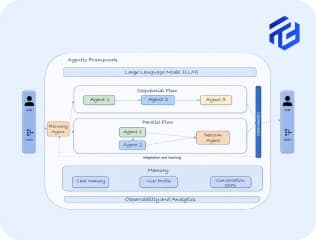


In the race to build intelligent platforms, many enterprises focus on models, data, and dashboards. But the real differentiator—the silent force behind scalable success—is architecture. Not just technical scaffolding, but the strategic design that governs how AI agents interact, orchestrate, and evolve.

Architecture Is the Intelligence Behind Intelligence
Enterprise AI isn’t just about deploying a model. It’s about deploying a system of intelligence.
That means:
- Modular workflows that adapt to changing business logic
- Agentic orchestration that enables autonomous decision-making
- Secure, compliant data flow that respect governance and scale with trust
Without the right architecture, even the most advanced models become brittle, siloed, and unscalable.
What “Right Architecture” Actually Means
The right architecture isn’t one-size-fits-all. It’s purpose-built for:

Architecture Drives Outcomes
Whether you’re automating compliance, orchestrating data pipelines, or deploying adaptive agents, architecture determines:
- Speed to market: Can you launch new workflows in days, not months?
- Resilience: Can your platform recover, adapt, and self-correct?
- Visibility: Can stakeholders trace decisions and audit outcomes?
These aren’t just technical wins—they’re business imperatives.
From Platform to Ecosystem
The best enterprise AI platforms don’t just solve problems. They become ecosystems. With the right architecture, you can:
- Empower teams to build their own agents
- Create reusable templates for workflows, prompts, and connectors
- Scale across departments, geographies, and compliance zones
In short: architecture turns AI from a tool into a transformation engine.
Final Thought:
If you’re building enterprise AI without architecting for scale, adaptability, and trust—you’re not building a platform. You’re building a prototype. The right architecture isn’t a backend decision. It’s a strategic one.